11 March 2014

Gratitude and dissatisfaction


My hair, with the (neater) hair of dear friends Janet and Zafer
 I love my hair. I think that each time I see it in the mirror, whether it’s behaving as I wish it were or frizzy and annoying. Each moment when the wisp of a complaint wafts by my brain, I catch it with a kind of outrage—is this how you speak of a dear friend who is leaving for such a long trip? Apologise! And all of this happens right at the back of my brain, both the complaint and the backlash against it. It’s as though internal self-critic is being edited by an advocate of appreciative inquiry. I find it amusing to watch my internal voices talk to each other. (You might find it rather more troubling than amusing, but bear with me before calling the authorities to take me away…)

Watching this little interplay between different voices in my head has been illuminating. I think often I would have ignored the fact that so much of the chatter that comes at me from me has a somewhat negative spin. Michael has noted for years the little twitch of displeasure my eyebrows give when I glance at the mirror. My eyes are drawn to this or that imperfection as they scan my face and body. And I think eyes are generally like that, and too often our minds are drawn to those imperfections in our lives as they scan our lives.

This desire we have to notice the negative, to search for imperfections and try to stamp them out—I figure it’s this desire that brought us fire, seedless watermelon, and the internet. It’s been our friend. But now I wonder if there are ways it is more foe than friend, at least for me.

Because while it’s true that the fact that I’ll lose my hair in the next three weeks adds a special poignancy to my relationship with my hair, it hasn’t changed my hair texture in any way. My hair is still just as annoying and beautiful as it was before I was set to lose it. It’s just that now I feel grateful for it because it’s suddenly temporary.

But we are all temporary. Every conversation, every relationship, every day, every lifetime—all just a speck of sand on the massive beach of time. This morning I have gotten up after a good night’s sleep in a lovely hotel in Sydney. I have eaten eggs perfectly scrambled, drunk fresh and vividly orange carrot/ginger/apple/turmeric juice, and answered email from people I adore all over the world. This has been a perfect morning in its own way, and now it’s over, more temporary even than my hair. Next I’ll go and spend time with clients I have come to love, and then that will be over. The sun rises and sets and this day is gone forever.

I know, though, that my eye would want to travel to the things that are absent in this day. Michael and the kids are too far away across the Tasman. Other loved ones scatter across every continent where eyes read these words. There are many more of you absent than present. It is a heartily imperfect day in that way. And, ironically, my hair is particularly frizzy. But there is something in me, some sort of grace, that is spending way more time smiling at the imperfections and letting my eyes and my mind linger on the touches of perfection, the corkscrew curl, the sparkle of laughter, the lingering taste of rose petals in a sweet, the cloud of cinnamon that scents my clothes because I packed my new green tea in my suitcase.

What do your eyes rest on as they travel over your face? What does your mind pick out as it travels through your day? How could we hold the terrible beauty that we are all temporary, that the day passes and you don’t ever get it back? How do we divert our attention from our distresses and losses to those things in our lives that are jewels?  Cancer seems to help with that, but I don’t suggest it as a method to develop your own appreciation. I’d love to hear what you do that helps you live more in gratitude and less in dissatisfaction. You can write to me while I try to defrizz my curls…


08 March 2014

Wigging out


I have been quiet here because I have taken to staring out the window silently, watching the waves lap on the shore. I think this is healing in many ways, but I notice that it’s not at all productive, and it’s not generally very connecting. But oh, it is very good for me sometimes.

Here's the wig we call Jennifer
I have had an extraordinary week, actually. First the workshop with Bill Torbert and 4 other amazing people north of Sydney. We walked on the beach and explored our deepest questions together. We ate delicious food and laughed and cried some. It was an island of delight inside this more difficult time and I am so grateful for Bill and the others for all they did to make my experience so magical.

Then the flight from Sydney to Wellington with my friend Zafer who is on his way from the workshop at the beach to the ski fields of Canada. I watched the heaviness grow a little as we neared the ground. In Sydney I’m a woman who does good work, has good friends, and happens to have cancer. In Wellington I feel like a cancer patient who probably has another life on the side. To underscore this feeling, after we landed we went directly to Leigh, the wig lady. I was getting heavier and heavier as we traveled into the hills.


Everyone had told me to go to Leigh—everyone. I figured it was because she had such a good eye and could make a wig look great. And it’s true that she does have a good eye and she knows her way around the wigs, but that was a tiny percentage of what makes Leigh special.
Looks like my real hair from the back

First, there’s the setting. Leigh’s studio is in her home, and her home is perched high above Wellington Harbour with sweeping views over the city and out to sea. She welcomed us in (Melissa met us there) and gave us cups of green tea as we sat on her balcony in the still, late-summer sun. She chatted with us and talked with passion and beauty about why she chose this work. She had a relative with cancer more than 20 years ago who struggled with the process of coming to look good again after chemo, and Leigh decided right then that she would build a business that made things easier for women. Opening her beautiful home was a piece of this. Sharing tea with us, laughing with us, explaining her background—all of these were parts of making this experience palatable. Leigh’s presence, her warmth, her gentle reassurance that chemo was a vital part of my healing process, an investment in my life, these are the reasons everyone says to go to Leigh; she is a healer.  In her hands, with her contagious laugh and her continual reframing of chemo, I could see through the darkness of these next few months and imagine the ringlets I’ll have at this time next year.


Here's the one we call Clare
And then there were the wigs themselves. This part was more daunting, more real. I tried human hair (which is 5 times more expensive), and synthetic. I tried long and very short. I tried hair that looks quite like mine and hair that looks like the hair I’ve always admired on other women. The synthetic was good enough, but which one? I was torn between a sort of more messy version of my own hair (“You can get MORE messy than your own hair?” some of you might be wondering) and the hair I’ve most admired in other women. I went back and forth between these two. The core question: Do I get one that looks like me, only a little diminished? Or do I get one that looks nothing like me and will not look anything like the way I’ll ever look again (long straight mahogany hair)? I answered this in the “why choose” way and got both. It’ll make me unpredictable and unsettling if I choose to wear the long dark one, but that one made me smile. (Michael calls the one that looks like me “Jennifer” and the other one “Clare.”)

Then, at the end, two different moments. I asked for a cap for my head when I’m not wearing a wig. Leigh said the wigs were like “French lace nickers.” They make you feel pretty but aren’t particularly comfortable or practical. The caps are like “regular comfy nickers” (although I was hoping for one in silk or microfiber that would be softer than the ones she had). Putting one on and tucking my hair into it took my breath away. Good God I look like a cancer patient. I’ve gotten used to the scars and the half-reconstructed breast (mostly) but wow, in the mirror I saw a woman with cancer looking back at me. She bore a family resemblance to me, but I have never seen someone with my eyes look so sick or so sad. It took my breath away how quickly I turned from healthy me into this unfamiliar cancer patient. Isn’t that the constant theme of this blog anyway?

This one doesn't look anything like me at all
And then out Leigh came with the free stands for my two new wigs. I expected something serviceable but these stands were small pieces of art—carefully turned and polished native kauri wood. The bottom each piece is signed. One says, “Guild of woodworkers Wellington. Best wishes Alan Robson.” It turns out that Leigh, looking for inexpensive stands some years ago, went to ask how much it would cost to have them made of wood. The head of the woodworker’s guild told Leigh that they would be happy to make stands for her wigs and that even more, they would donate them to cancer patients for free. They have been doing this for years now. My eyes fill with tears just now thinking about it, these strangers turning and sanding and polishing these stands for people with cancer they'll never meet. I am once again overcome with gratitude at the kindness of people.

Now it’s dawn on a grey Saturday morning. The seagulls catch the wind off my roof and hover motionless in the air in front of my study window. One of my favourite people is making coffee in my kitchen, and more of my favourite people are asleep all over the house, all over the village, all over the country. I came home to a bag of green tea I LOVE (green tea with cinnamon—THANK YOU BETH!) and to a series of cards so beautiful they took my breath away (thanks especially to Kate for the poem. Wow.). I now have the most well-researched and evidence-based set of vitamins and supplements to carry me through the chemo period (thanks Mom). And I have connections with beautiful people around the world. In many ways I have never felt so fortunate, and, as the chemo lurks, I have never felt so afraid. Life is a mix, but oh how happy I am to wake up to it each day.

Chemo schedule:
I get chemo 4 times: 24 March, 14 April, 5 May, and 26 May. I am told it is very variable, but I will likely be most sick the first week. It is the second week that is most dangerous, though, because it’s then that my white blood cells will all be shot and an infection that would normally disappear without my noticing it can become life threatening. The third week is the best week, and then the cycle starts again…

By mid June, I’ll be done with this cancer chapter. One foot in front of the other...

02 March 2014

What we talk about when we talk about death


Today at a beautiful opening session of a workshop, I led a session that I called “what we talk about when we talk about death.” I have found that different people mean different things as they talk about death, and that we can miss each other if we think we’re talking about the same thing just because we use the same word.  I am curious about these connections and disconnections. So instead of asking people to think and talk about death, I wondered about thinking and talking about life.  I asked people to think about incidents in their lives that brought to their mind/heart the preciousness and brevity of life. I wondered whether these would be heavy with ideas about death—are we talking about death when we talk about life?

My first discovery was that each time we touch that sense of how precious and fleeting life is, it is beautiful. Every story was a jewel, some similar, some really different. The majority at least touched death: the renewed sense of urgency when someone dies unexpectedly early, a near death experience, the sense of generations passing in the space of an outbreath. But there were moments that had nothing to do with death: delight in our children, the joy of love.  Each of these stories wove together joy and transience. We began to wonder about whether you could have a sense of real connection to joy without a sense of the ephemeral nature of it.

Yet it’s in that space where fear lies, too. Fear is when we see how ephemeral our joy is and we try clench it tightly so it will never get away, or we run away from joy because we know it’ll leave us. Fear, I am discovering, is when we are so afraid of loss that the future pain takes over the delight of the present. And despair, I think, is when we have a deep connection with the brevity of life without an equal connection with its beauty.

This morning at dawn I walked to the beach and stared out into the grey distance. And there, like a benediction, was a pod of dolphins, playing in the surf. They swam back and forth in front of me, as though promenading for my pleasure.  Sometimes they’d hug the crest of a wave, sometimes ride it, and sometimes disappear under the surface for an impossibly long time. I don’t know if the dolphins have a sense of the brilliance of each moment, or whether that delight is tempered by the threat of sharks and fishing nets. But I know that my joy, upon seeing them, was pure as sunlight and, like sunlight, held all the colours together, refracting and shifting with the air. It is astonishing to live on this planet. It is astonishing to love, to laugh, to weep, to watch dolphins, to feel fully alive. What we talk about when we talk about death is, necessarily, life I think. And when we weave our talk of death and life together, we have something magnificently bittersweet and whole and true.

As  the philosopher Susan Christ wrote, “This whole is the earth and the sky, the ground on which we stand, and all the animals, plants, and other beings to which we are related.  We come from earth and to earth we shall return.  Life feeds on life.  We live because others die, and we will die so that others may live.  The divinity that shapes our ends is life, death, and change, understood both literally and as a metaphor for our daily lives.  We will never understand it all.  We do not choose the conditions of our lives.  Death may come at any time.  Death is never early or late.  With regard to life and death there is no ultimate justice, nor ultimate injustice, for there is no promise that life will be other than it is. There are no hierarchies among beings on earth. We are different from swallows who fly in spring, from the many-faceted stones on the beach, from the redwood tree in the forest.  We may have more capacity to shape our lives than other beings, but you and I will never fly with the grace of a swallow, live as long as a redwood tree, not endure the endless tossing of the sea like a stone.  Each being has its own intrinsic beauty and value.  There will be no end to change, to death, to suffering.  But life is as comic as it is tragic.  Watching the sun set, the stars come out, eating drinking, dancing, loving, and understanding are no less real than suffering, loss, and death.  Knowledge that we are but a small part of life and death and transformation is the essential religious insight.  The essential religious response is to rejoice and to weep, to sing and to dance, to tell stories and create rituals in praise of an existence far more complicated, more intricate, more enduring than we are.”  

26 February 2014

Photo shoot


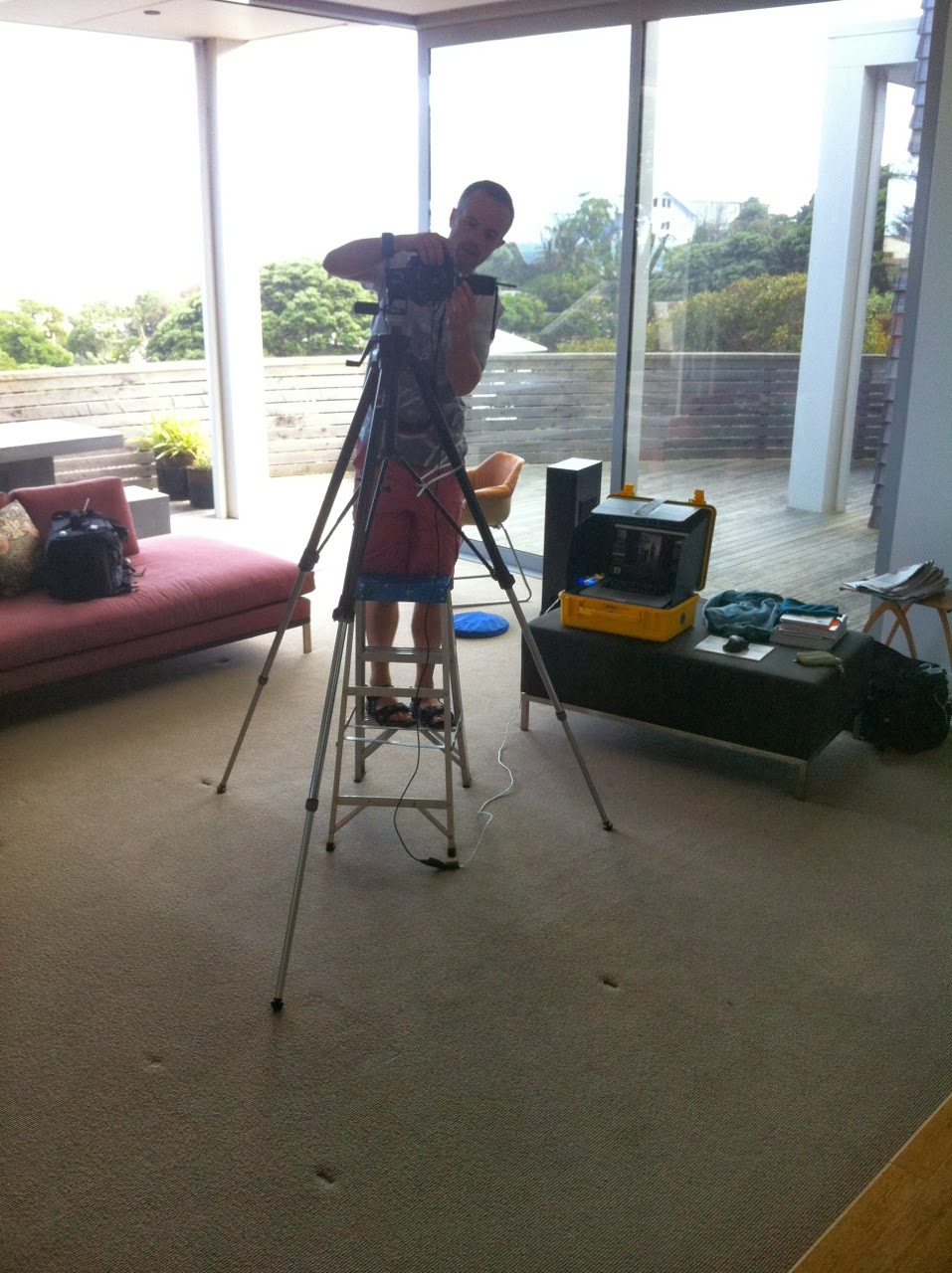
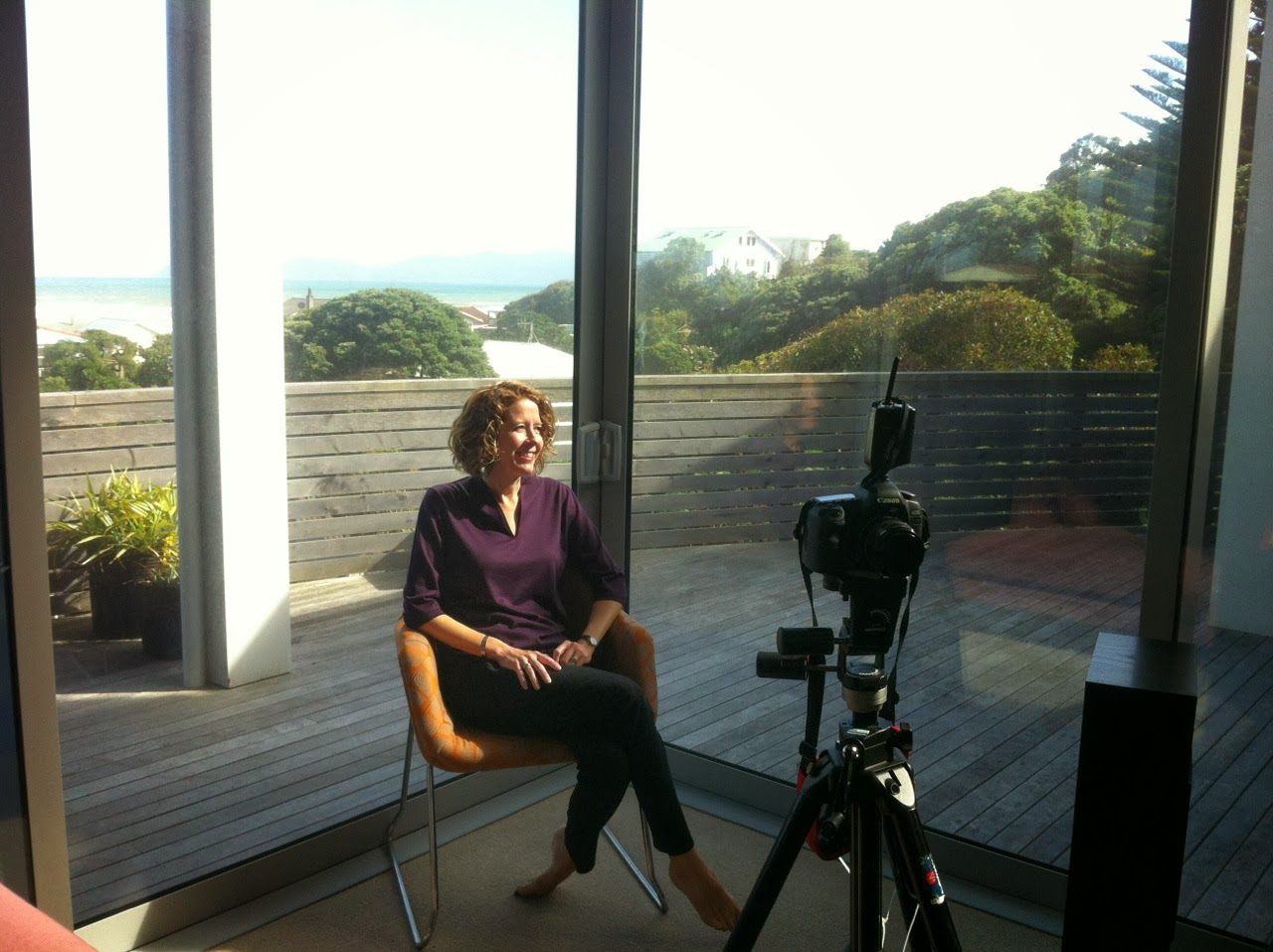
Pointing away from the view to get better light
I am in the preparing phase as well as the busy phase now. I am starting to take new supplements to boost my immune system before chemo. I got my hair styled in the way I might like to wear it (or er, someone else’s hair anyway) for many months to come. And some time in the last two weeks, I realised I that Keith and I would need a book picture for our book jacket well before my hair grows back. I was not excited about a post-chemo book picture, so we needed to get a move on.

colour matching
My last book picture was taken by a local guy who specialises in portraits that are nestled in a location. Behind me in my book picture, you can see the little cottage/shed where I wrote the book. It feels like me, and I’m at home. I love that. The downside of this photographer—and it might be every single photographer, but I have little experience—is that I am constantly feeling wrong. “Move your chin up.” “Move your chin down.” “Smile some, a real smile. Really a real smile. Ooh, not any teeth though. Smile with no teeth.” “You look uncomfortable, move your body like this. No that’s worse. Do it the other way. No that’s worse too. Hmmm.” You get the picture. But Keith and I were moving at speed and so we didn’t have time to find a replacement.  It turns out that I did something better though—I found a distraction.
You can see my house over my shoulder

With two people in the picture, I got less attention. And with Keith as one of the two people, in his full shirt and pleated pants, I got way less attention. Now Keith was the focus. “Lean against the post. No, that wrinkles your shirt. Lean less. No but look comfortable. Oh no, not like that. And your shirt is still wrinkled. Let me fix that. Ok cross your legs the other way. No, that wrinkles your pants—looks like a giant arrow pointing at your crotch. Do something else. No, a different something else. Good. Now smile!” I just stood there with a genuine smile on my face this time, listening to my partner get all the flak. Isn’t that what partners are for?

too windy to be outside
One more aside. This photographer is great at placing people into a setting. But this is New Zealand and the settings aren’t always great for being placed into. On this day in a month with limited time, the wind was blowing too hard to be outside. So these pictures were taken inside a (truly stunning) house that has no special meaning to me and looks (from these pictures) to be a studio anywhere. I know cancer is supposed to make me stop sweating the small stuff. I know that’s one of its gifts, and believe me, I’m trying to harvest as many cancer gifts as possible. But this one is elusive so far. I still don’t have the sweet spot between knowing what’s actually important and what isn’t. Or ok, that’s wrong. I KNOW that it’s not actually important that we have a picture that says something sort of sentimental and New Zealand to me. But I don’t know how to let it go, now that I know it’s not important. I’ll let you know when we see the proofs…
 (You can see from these pictures that the house we were in is magnificent. But the light and the wind meant we pointed away from the outside view and elegance, and in toward plain white walls. Not the fault of the house or the photographer, just life, really...)


21 February 2014

One month post surgery, here's how I am


Ok, the last blog was admittedly theoretical, but I am working to use all that we know about coping with uncertainty and transition and put it into practice during this uncertain transition for me. But people want to know how I am. So here goes.

I’m mixed. Ha! Don’t you feel well informed now?  Mostly I’m mixed trending to good, often to excellent. Some days are harder.  I am sore but nearly pain free (I take painkillers only at night) and I go for long walks with Melissa in the hills each day. I am back to working, which is so good for me. I have a full schedule of phone calls each day to design or coach or debrief the Leadership Circle, and I can feel my life lifted by these experiences. I laugh easily and often. I connect deeply with my clients and friends—maybe more deeply than I would have two months ago. I soak up the sunset and the calm still days and the blackberries in the park. I am learning to like green tea, as long as it’s mixed with some kind of citrus.

My body is coming back into shape though my reconstruction is not yet complete. (Good things come to those who wait?) Because the implant sits behind the chest muscle, it needs to be inflated over time. On Monday I flew to Auckland for the first of probably two such trips. It was the most surreal appointment I’ve ever had, as Stan found the valve he implanted under my skin and slowly, while chatting, pumped 50ccs of saline through a massive syringe and into a tube into the needle into my body. It looked everything like a bike tire pump. But I trust Stan and he takes my questions seriously and gives me straight answers.  He’s my favourite cancer doctor ever.

I have struggled more in the Wellington system and right now feel like I’m at a very confusing part of the decisions. We do in fact feel like a number in the bureaucracy of the public system—probably not different from what it feels like in an HMO in the US. It is hard to get the questions we have answered and between how busy they are and how busy I am these next three weeks, it looks almost impossible to sync up. Chemo is a clear go, and starts probably on the 24th of March. Radiation is a question—two panels of oncologists have looked at my test results and recommended different things. The drugs after the chemo (or chemo and radiation) are a clear go—for five or ten years. I will need support getting through this storm.

I have had my last hair cut—which I love (if you’re in the Wellington region you should try the brilliant Rene at Renascence by the C). Rene knew that this is the last time I’ll cut my hair for a while—and that this is the cut from which the wig gets made, so it had to be good. Still, it was surreal to imagine that this cut might be my last hair cut for 8 months or a year, and that then I’ll emerge with spiky hair, shorter than I’ve ever had it before.  (I have had emails from those of you who have lost locks permanently and are now totally bald forever—and I happen to think bald men are beautiful—and I want you to know that I’m feeling your pain. And I’m utterly grateful that mine will grow back.)

My diet has shifted in some remarkable ways, instantly. I have given up refined sugar and white flour, just cold turkey. No cravings, no sadness. Sugar now terrifies me. I’ve always known it was poison, but now I know that cancer loves sugar and I am really not a fan of cancer.  I don’t mind eating chicken as much as I thought I would—if it’s your chicken or your life, that’s an easy equation (but I don’t cook with it or eat it with bones or anything).  I drink my carrot and ginger and plum juice with turmeric each day (cancer hates turmeric). I say dozens of times a day: “My body hates cancer and won’t grow it.” In the odd ecosystem of the breast (which is so hormonally active) cancer can grow. But cancer in your breast doesn’t kill you. In the rest of my body, I’m believing cancer won’t grow. And just in case, we’ll work on the diet and then toss the chemo and the drugs at it to be double sure. (I’m sure this diet will not be absolute, that I’ll indulge in birthday cake and delicious pastries again, but I bet I’ll never go back to the way I was.)

Mostly I live in a deep gratitude. I wake each day in the most spectacular place. I love the letters you send me when you are just thinking about me or thinking about something we have done together. (Even when I am too swamped to answer them all, I love them so much and read them again and again.) Aidan and Naomi are thriving in high school and doing really well generally. My dogs make me laugh. As long as I don’t give into the Bad Questions and dip into a cycle of despair, I am more open to love and delight than ever. And if it’s all tinged with a kind of bittersweet, that feels ultimately truthful. The bitter and the sweet create one another. Giving ourselves over into the fullness of it feels like it makes more things possible, feels like we’ll spend less of our time and energy forcing the dark away and just let it in, knowing that it’s frightening and sad as well as soothing and delightful.  These next six weeks are a contrast in opposites too. I’m off to Sydney next week and I’ll work like crazy for three weeks (mostly out of town, mostly swamped) and then come home and begin the long quiet chemo time. I am strong and I have a fabulous web of friends all around me, all around the world. Surely that will help me get through. Surely your strength and love become a part of me as my strength and love become a part of you. We make each other better. We can each work to make every day count. We can each work to be a little more open to the pain, which makes us a little more open to love. Drink your green tea, throw out your soda, and tell someone how much you love them, even if that’s a little frightening. This is the way we know we are alive.

19 February 2014

Basins deep and shallow


Jasper cooling off
Before my life spun into a different direction, I was thinking and writing about the Five Percent by Peter Coleman. Coleman writes about the intractability of a small number of conflicts (local and global) and uses ideas from complexity theory to make sense of them. It’s a fantastic book and it shapes some of my thinking about my work—and it turns out to shape some of my thinking about my sense of my health and my life as well.

Coleman writes about attractor basins, and the way our sensemaking creates little patterns of stories that all of the data seems to go into and then get caught in.  He talks about it with conflicts between people, but I have been noticing it lately in my own sensemaking and the sensemaking of those around me. I am watching how much of our pain is self inflicted, and how unhelpful that is in a world that offers plenty of opportunity for pain as it is.

landscape with attractor hills...
I have had the opportunity lately to watch myself cycle into periods of peace and then drop like a stone into periods of despair. We probably all have that experience of ourselves, but my cycles are rather shorter now than they ever have been. I am not opposed to the darkness of the dark—this is a life and death illness, and while my cancer is better than many, it is unfortunately worse than others (and obviously worse than not having cancer). It seems reasonable that I would find my days of darkness, especially as new and threatening information comes along. In some moments, I fall into what looks like a self-organized basin of misery and every single thing gets pulled into its magnetic pull of gloom.

Some of those experiences are relatively brief—a good hard cry with a friend and then a walk on the beach. Those feel like a dip into a shallow basin of darkness from which I can emerge soon. Some of those experiences are much longer and I find that I struggle to smile for hours or even days at a time. These feel like deep pits with slick sides and a narrow point at the bottom—everything slips down into misery. I know that my life is no less wonderful, that Aidan is no less amusing, that the beach and the hills are no less beautiful, but in those deeper basins of despair, I can’t pull up enough to make sense of any of that except through the particular vision of woe and potential loss.

There is a bigger and wider basin of emotions that seems to hold much more range and where things get all mixed in together. I see this as having a wide mouth and a relatively flat bottom. Emotions mix and change there freely, but the valence is towards gratitude and love and delight. Sadness is a piece of that experience, but it doesn’t sweep through and take the others to a narrow focal point; the aperture remains wide. This is happily a more frequent home for me. I like it much more and it seems much more suited to the multi-variance of life in any case. The pit of despair seems not only miserable, but unhelpfully simplistic.

I wonder whether I have always had these different modes, whether you have them too, or you have your different ones. I wonder whether there is a kind of a patterning of our emotions so that some get deeper and more narrow basins and some are wide and flat and variable. Coleman writes this way about conflict—the more intractable it is, the deeper and more narrow the basin is.

So, then the question becomes: What can I do to widen the basin of the misery or move out of it into the other basin which is more rich and varied? And, lucky me, I have had plenty of cycles to be able to pay attention to the questions that spin me down.

One of the things Coleman points to is the way that deep attractors become simple—they take a very complex situation with lots of diversity of thought and opinion and perspective, and they build to one very simple black and white story. Boy do I know that feeling. I get locked into a “cancer sucks and is ruining my life” kind of story and the basin narrows and deepens. (The other set of questions that pulls me in are the looking backwards question: How did this happen? Why didn’t I catch it sooner?” These are unknowable and just spin me down into misery)

Then the Coleman ideas get even more helpful. His first point: “Respond to dynamics, not events” is cognitively helpful and it’s what this repeating pattern of cycles is allowing me to do. I think of these as events (like when the oncologist told me there was a 10-20% chance the cancer had already metastasized) but really that is just part of a dynamic—I hear news that opens up the possibility for a shortened lifespan, I ignore percentages (because honestly, in the moment, all percentages are bigger than they should be when you’re talking about your lifespan), and then I fall into despair. I had thought I was getting better at resisting this pattern by gathering information so that I would no longer be surprised, but since I am so often surprised in doctors offices (and since Jonathan asked, teasingly, “When do you think you’ll know enough to eliminate all possibility of surprise?”), I think that’s probably a losing strategy. Hooking into the pattern I’m seeing rather than fixating on the data (the event) might be a very useful thing to do. Watch this space to see if I can manage this cognitive exercise at my next oncology visit next week.
 
Then there are two points I’m practicing each day. Coleman says “Respect the logic of the conflict.”   This is a thing I’ve noticed about myself and have asked for from my friends: respect my fear and dark moods without trying to jolly me out of them or, in the moment, tell me that 10% is a small number and that I should focus on the 90% of women who don’t die in two years. Yes of course they’re right, but as Coleman suggests (and I can easily support), those ideas bounce off fast.

The other point that seems core to me right here is Coleman’s: “Open it up.” This is where you make careful use of the complexity of the situation and weave it through the simplicity of the deep basin. I have taken to listing the things cancer brings into people’s lives that they love: the deeper relationship with family and friends, the ability to have conversations with friends, colleagues, and clients about death and passion and purpose. It seems like cancer has the chance to be awfully developmental. And, as Aidan said as we were walking towards the bus stop this morning, “You have cancer, Mom—now you’re not boring at all!” Cancer is not a simple disaster; it is a piece of life experience that connects me to pain and to other people and deepens my attachment to life and joy and purpose. I am trying to “open it up” to hold on to the complexity of it as it weaves through my life. (And I’m using the Anticancer book to create a body so hostile to cancer that it closes it down!)

So this is me on a day so hot (for Paekakariki) that the sea fog has rolled in and in the last 20 minutes has obscured the islands in front of me. Here is the downside of a hot and still day (see, each thing has its light and dark). In another few minutes I won’t be able to see the car in the driveway. And then the wind will shift and the fog will blow away and it’ll look different again. Like life, really, except when I get caught in the basins that don’t allow the fog to lift.

15 February 2014

Measuring lives

the full moon setting into the heart of a mobile from my dad. dawn rising
-->

I woke early this morning and watched the full moon sink, red and plump, into the sea at dawn. I lived the first four decades of my life without knowing that at the full moon, the moon rises just as the sun sets and it sets just as the sun rises. Seems like vital information somehow—how did I miss it for all these years?

This has been a grim week. I’m clawing my way up out of the dark on this lovely day and thought I’d spend some time with you thinking about the various measurements we use to think about our lives.

We say all the time in educational research that not everything that counts can be counted and not everything that can be counted counts. But still we measure what is easy to measure, and then we believe what was measured was the most important thing. And that has messed with us in schools and in businesses and in every other place we want to ask: How are we doing now? What should we be doing better? 

It has been occurring to me that much of what we measure in a life is length. Someone who dies at 30 is a tragedy; someone who dies at 98 is a triumph. The Queen sends you a birthday card if you make it to 100. I’ve been wondering about a more three dimensional way of measuring life—the volume approach.

Length matters. We know this. We do our best to improve this. I don’t smoke. I exercise. I eat well (though it will surprise many readers to know that I had chicken for dinner last night for the first time in something like 15 years). Important pieces of this factor are out of our individual control. You do what you can and hope luck and genes carry you the rest of the way.

Height matters at least as much. For me, height is about the number of lives we touch, the way the world is improved by our presence. There’s no good measure for this—the number of likes on a facebook posting is no proxy for the number of people who are different (hopefully in a good way) because of you.  I’m trying to figure out how we can get a better measure of this and keep it more in the front of our minds. One way is to mess with length of course—funerals are places where these stories rise to their full glory (this is unhelpful for the person in the casket though). Retirement parties are great for this too—I wept my way through my father’s retirement party hearing about all the lives he’s changed. Still, I think that comes too late as a helpful measure to guide our days. Some birthdays do this too: On my 25th birthday, my students (high school seniors, maybe some of them reading this now in their mid 30s—remember when 25 was unimaginably old?) snuck into my classroom before school with 90 helium balloons, one for each student I taught. Each ribbon on each balloon had a message from a student. Have I ever been so moved? I still have the cards in a box near my desk. Getting cancer seems to be a decent proxy. I am thinking I might print out all the emails and cards from people who have written to me saying that their lives were made better by me and hanging them from ribbons in my study or my bedroom, in both homage to those students nearly 20 years ago and also to hold my attention more to height than to length. Height surely matters more even though it’s harder to measure.

Depth matters too. I think this is about the power of the emotions we allow ourselves to feel, the measure of our love for others, the unbridled sense of awe at the sunset, the wholeness of our compassion when meeting with another human being in pain (or when looking with grace at our own pain and failures). On this measure, living in New Zealand is a bonus because I am so often swept away by the power of the landscape. Loving so broadly is a bonus because I am so often swept away by the depths of my love for my friends and family and clients around the world. Even my perhaps over-active negative emotion meter (last night Naomi and Melissa discussed whether I am totally over dramatic in my negative emotions) is a bonus (if one were to believe them that I am) because I get to experience emotions in surround sound often—the dark emotions of the cello along with the floating delights of the flute.

I had coffee yesterday with a friend whose cancer makes mine look like a mosquito bite. Her life, measured in length, is on the tragic scale. She is surrounded by a landscape of snow-capped mountains of loss. But her life measured in volume is not tragic in any way; in fact, it far outstrips the volume of most people who live long but ordinary lives. She has helped make the world better for thousands—maybe hundreds of thousands—of people through her work in aid and development NGOs. She has loved deeply and well and is adored and respected by those who are fortunate enough to know her. And her eyes shine when she talks about the tuis and the morporks in the bush, about doing homework with her kids, about watching the waves come and go. She has mothered her children so well that she will live through them and carry on into generations she will not see. She will live through so many of us as a model we can live into, as a person who loved well and made the world better for others. I want to hold her life—and mine, and yours—in their fullest, three or more dimensions of bigness. And I want to remember even in my darkest days what they teach anxious teenage boys in health ed: size matters, but it’s not the most important thing.