13 February 2014

Crystal balls


I was looking forward to my oncology appointment yesterday in the way that sentence is possible: there would be progress and information and clarity. These are things I crave right now, probably more than I have ever craved them before. Alas, it was not to be so, and I left so knocked off my perch that I needed to go home instead of closing the leadership program Keith and I had been teaching.
There were a variety of unsettling things about the appointment. Some of them I totally expected: hearing about chemo is truly terrible. Everything you think about how bad it is is an understatement. Or at least, is a possible understatement. They have to tell me every single thing that might go wrong and the various (few) ways to protect against it. The body is under siege for three months, and you want the cancer to lose the battle as the rest of you survives. But sometimes that’s a margin call.
Some of them were more systemic: After having had my surgery in the private health system here, where Stan (my fabulous surgeon) is incredibly proactive and available, the public system feels much more like a meat grinder. We were met by a lovely young interning doctor (studying to be an oncologist) who said she’d “begin” our appointment. She was fantastic—warm and engaging—but held the tough questions for the official oncologist we thought we were seeing. After 90 minutes with her, she said, “Well, I think Catherine [the head oncologist with whom we thought we would be meeting] would at least like to meet you, so let me see if she’s free.” And we had 15 quick minutes with the oncologist who will be the one we’ll see again (because the intern will rotate into someone else’s team by the time the chemo begins). In the meeting, there were a couple of things we were confused about, and it was both hard to get clarity in the meeting and is also frustratingly unclear about how to get clarity in the future. The next time I’m scheduled to meet Catherine it will be moments before the chemo IV gets hooked up. In between, I’m to talk to a regional oncology nurse. I am adrift inside the public system and feel amazingly fortunate to be able to mobilise my fabulous network (which I did, on the train home).
The biggest issue was about whether to have a full PET-CT and bone scan to see whether there are established tumours that have already metastasized elsewhere in my body. It seemed a heavy dose of both radiation (which causes cancer of course) and uncertainty for the very small chance that these tumours might be active elsewhere. (And silly me, I had thought that this would actually be an impossibility since my lymph nodes were clear.) Because we were going quickly, we must have misunderstood Catherine’s answer that there was a 10-20% chance that these tumours had already metastasized. I asked a follow up question, she affirmed that number, and we left the appointment thinking that the odds of my living five more years were smaller than we had thought they were going in. I wept on the platform as I was waiting for the train.
This number is wrong, by the way. Very wrong. You and I can both breathe again. I have followed up with Stan and with Kathy the miracle oncologist in the US, and Mom has done research, and I have breathed through it. The odds that there are already tumours elsewhere are far far less than 10%. But, in fact, they are greater than the 0% I was thinking. And so here begins a theoretical question that is very very real to me right now: How much do I want to know about what might happen in the future? How much expertise to I want to use to predict the unpredictable (and complex) world I’m living in to. Keith and I have just written a book about some of these ideas, so I have a really strong theoretical grasp on it. But now it’s a life or death question as well.
You see that I am far from alone in pondering this question. The New York Times today had a cover piece (at least on their homepage) about the value of predicting breast cancer via mammogram (http://www.nytimes.com/2014/02/12/health/study-adds-new-doubts-about-value-of-mammograms.html?src=me&ref=general). The conclusion there (as in the piece I posted a couple of weeks ago) is that early discovery of breast cancer with mammograms leads more to unnecessary treatment than to saving lives. Knowing as much about breast cancer treatment as I now do, that just sucks because surgery and chemo and drugs are miserable. And still, wouldn’t you want to know if there was a tiny tumour growing in your breast? Wouldn’t you want to know if you had DCIS, the very earliest signs of cancer? Wouldn’t I have wanted that before, wouldn’t I have chosen to put myself into the potential over-treatment category so that I could also be in the potential life-saved category?
Now I am looking at a full body scan with a heavy dose of radioactivity, that will show me whether there are any tumours of 5mm or more elsewhere in my body. There are lots of risks of false positives, which (like mammograms) lead to more tests, to the horrors of waiting, to the unimaginable (so far to me) terror of seeing the envelope of my life shrink down to less than five years, (For a brilliant piece on the terror that comes from waiting, see this http://www.theguardian.com/lifeandstyle/2014/feb/12/henning-mankell-diagnosed-cancer). There is a much simpler, new
test (not yet available in NZ but Mom has figured out how to get it) that will tell me whether I have Circulating Tumour Cells (CTCs). If the test shows that you have none, that is a very good sign for a long life. If you have two, you should start to worry. If you have four, the research suggests your chances are grim indeed.
And the readers who write to me with their stories and their miracles will tell me that even after the data, you have only statistics. Only other women who have died before you and ones that are still alive. Every ten-year study of what percentage of women died is 10 years or more old.  A decade is a long time in the world of cancer. A percentage is a study of a population. I am a person and not a statistic.
Stan was clear on the phone last night that I might already be in the nearly 50% of women with stage 2 cancer who would never die from it without a single extra treatment. 50% of us leave surgery cured and don't need chemo and don’t need tamoxifan with all their associated miseries. But which 50%?
The tiny percentage of women with stage 2 breast cancer that leave surgery with metastases already in other organs have a dire prognosis. But there is powerful evidence that in some (very few) women, those other tumours just go away. There are endless stories of people given six months to live who dandle their grandchildren on their knees 30 years later (and I am grateful to those of you who are reading who have shared your stories with me—I call them up like a guide star when I am awake in the middle of the night). How does one get into that group?
We cannot get information today that will tell us about our future. No matter how good the information is (and while cancer information has progressed so dramatically, there are still so so many things experts do not know), we cannot peer into a medical crystal ball and see whether this thing or that one will kill us and when that might happen. So how many crystal ball proxies do we want, and at what cost? How many thousands of dollars of tests, how much radiation, how much terror?
So I sit with this question today, as the sea froths white and the clouds disappear over the hills. I drink my green tea and eat my heavily-tumeric-laden curry (ahh, the amazing benefits of turmeric and green tea—not necessarily together!). I want to guide my future well. I want to find out and do the responsible things. I want to know what there is to be known and let emerge what there is to emerge. I am taking advice from the experts who disagree about what is the best course of action. (There is also broad disagreement about radiation, another kind of insurance for the future that comes with a price, but I’ll think about that next week.) I am reading articles my mother recommends and staying away from the ones she says not to read (and what horror—and love—to protect your daughter from these frightening studies by absorbing them yourself). The future is not knowable, and yet it is influence-able. And in the confusing space between those two things things, I feel gratitude for those I love and delight for the opportunity to be alive each day.  I drink my tea and stare out at the waves.

11 February 2014

Hi ho hi ho, it's off to work I go


I have returned to the working world this week, teaching a leadership program for a beloved client here in Wellington. I was anxious about this. These are long days and teaching is a high energy, full body experience. I needed to wrap my head back around the content and be there for the participants and not let Keith down. (Though in truth, Keith has always been clear that I could leave at any point and he and our other partner Jim decided long ago that Jim would just be nearby, doing other things, so that he could step in at any time if I got overwhelmed or exhausted. I have very very good partners.)
It has been both more exhausting and more life giving than I had imagined. I admire these participants and the work they do.  I am excited about the ways our work together might help make their lives better—and help them accomplish more of the work that they and I care about. I love the work I do and the things I teach and the people I get to work with, and I was overcome with how lucky I am to get paid to do work that matters so much to me. I was more comfortable in my evolving and healing body than I feared I would be, and I got into the flow of teaching again (after a few minutes of self-conscious nerves that are unusual for me). I wasn’t at 100%, but I felt I was doing a good enough job and supporting them in important ways. This is a helpful reminder about the ways my work keeps me zingy and alive, the ways the relationships I develop with the participants feed a piece of my heart and my soul.
And at the same time I was exhausted. I didn’t notice the pain when I was in the front of the room, but it came thrumming back afterwards. I missed my nap. I was nearly incoherent at the end of the day and weepy before bed. The participants and I struggled to find a way to talk together about my cancer—they wanted to express their care and their curiosity, and it's hard to know how to do that. We were awkward at first trying to find which words we were each comfortable with (clearly some people hate to say or hear the word "cancer") and what information was public versus private. I have been finding the many ways having cancer is  a connector to people (like you reading this now). It turns out it is also a kind of divider as others and I need to find a whole new rhythm in our connection, as we navigate the new territory of life and death and sickness and prognosis and fear and pain. Isn’t it funny that even in my work—where we so often talk about whole-bodied and whole-hearted experiences—that these topics are rarely a part of our conversation. We so rarely talk about death at work; this makes me wonder how much we really talk about life at work.
Even with all of this lovely focus on getting away from the cancer and into my work, I am still feeling the way cancer controls my life. I had been clear with the folks who schedule the doctor’s appointments that I was teaching these three days, but still, the only appointment with the chemo oncologist they offered me was Wednesday morning—the last day of this program.  And with only the moment’s hesitation that it took to sigh, I accepted the appointment, took Jim up on his offer to stand in for me, and told my participants that I’d be in as soon as I could be. So tomorrow begins with a trip to another doctor. I think (I hope) there will be no surprises. I know that I will need chemo, know that it’s an important part of increasing the chances that I will live a long life. So I am not sure really what terrors this doctors appointment holds, but I also know that now doctors and fear are braided together. I remember with great fondness the first 43.5 years of my life when doctors weren’t terrifying (probably they were terrifying the first 10 years, too, now that I think of it).
All of this helps remind me of how vital a part of our lives our work should be and how sustaining of our biggest selves. Work is a life or death matter for us all, because so much of our short lives are spent on the job. I feel overcome with gratitude today that the days and weeks and months I spend working are so bursting with meaning, surrounded by people I love to teach with, clients I love to teach, and ideas that make people’s lives better. May your worklife be so blessed.


08 February 2014

Naked mole rats


I get spun out for the most bizarre set of reasons. Over the last week I have been coming to deal with what it will mean to have chemotherapy. Some of the issues I have with chemo are the Big Issues: what does it mean to put a bomb off in my body? What are the long term implications of this intervention? Some are even more terrifying: What does it mean to be thinking of myself as so at risk for metastasis that chemo is the right choice? Some are fear and sadness woven together: the discomfort, the loss of work, the loss of my ability to travel, the loss of our plans for Aidan’s Bar Mitzvah. But oh, how it pains me to admit, that the idea that I fixate on most is the loss of my curls.
I should have bigger concerns than this. And yet, with each form of hair I realize I will lose, I have a new surge of misery (see footnote one). My hair—which I only discovered was curly 3 short years ago—gone (see footnote two). This feels impossibly tragic. Then the horror of realizing I would lose my eyebrows. And my eyelashes. This feels disfiguring—it will change totally the way my face looks. I realized that my horror was about looking (and here’s the rub) like a cancer patient.
I knew that this had gone too far when last night I looked at my reflection and realized I would lose my nose hair. And then I began to find myself teary and feeling sorrowful about the loss of my nose hair. What would breathing feel like? What about when it was cold? Wouldn’t that sting to breathe cold air without any nose hair protection? Wouldn’t my nose feel and look different without hair?
Now here a note to those who love me. If you ever try to talk me out of my misery at a time like this, it will go badly. The more you tell me—no matter how lovingly—that I will live well without my nosehair or (worse) that it will grow back, the more I will defend the horrors of nosehair loss. I will dig a pit of despair about all the ways my nosehair has been a vital part of my identity. 
Now I might (and probably will) come to think my absurd concerns are absurd. And you are welcome to join me in looking back at concerns we now both believe are absurd. But if you try to get me to believe that my current concerns (no matter how absurd) are not concerning, you’ll back me into a bad place instead of helping me out. Counter intuitive, I know, so I’m not claiming logic (this is after all a post about nosehair) but I’m letting you know.
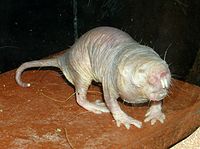
In the depths of my misery about all of this hair loss, I began to think about the naked mole rats Aidan used to love so much at the National Zoo in DC. These are horrible looking creatures for many reasons—they are blind and constantly bumping in to things, and they tunnel in the dark, backwards, they have freakish faces—but perhaps the most startling is that they are totally hairless.
I went to Wikipedia to find a vision of these dreadful creatures—these creatures that reminded me of my chemo-poisoned self. In intended to wallow in self-inflicted misery. But, in the many things I am surprised to learn on this breast cancer journey, as I read about them, I made a totally new discovery:
Naked mole rats appear to have a high resistance to tumours; cancer has never been observed in them.[19] …On June 19, 2013, scientists reported that the reason naked mole rats do not get cancer may be because they produce an "extremely high-molecular-mass hyaluronan" (HMW-HA) (a natural sugary substance), which is over "five times larger" than that in cancer-prone humans and cancer-susceptible laboratory animals.[29][30][31] The breakthrough scientific report was published a month later as the cover story of the journal NATURE.[32] A few months later, the same University of Rochester research team announced that naked mole rats have ribosomes that produce extremely error-free proteins.[33] Because of both of these achievements, the journal SCIENCE named the naked mole rat "Vertebrate of the Year" for 2013.[34]
Suddenly, this “Vertebrate of the year” for 2013—which had been my poster mammal for the horrors of my cancer treatment—looks like the poster mammal for my long life.  I ended up giggling in bed over their pictures and hoping that I have multiple things in common with these creatures (but I would like to pick which things they were…). This then is what life feels like: real tragedy, manufactured (self-generated) tragedy, and laughter. I think if you listen really well, you can hear the naked mole rats giggling.


Silver lining footnotes: Chemo benefits: the untold story.
Footnote 1: The first person who introduce this idea of the loss of all body hair to me was the nurse you might remember reading about last week (the one who thought that if I “slapped a nipple on it and pumped up my left breast, I would have great boobs). She also told me she thought I could really carry off bald, and she leaned forward and talked in a somewhat hushed tone about the delights of “a free Brazilian.”

Footnote 2: The broad consensus is that after chemo, hair grows back curlier than it was before. This leads me to think of my Great Grandmother Clara, who as a child saw her sisters get some kind of illness (pneumonia I think) and lose their hair just to have it grow back curly. The story in my house is that Clara used to sit with wet hair next to open windows in the winter, wishing and wishing for the disease that would make her hair curly. I intend to be in daily contact with her spirit as I go through chemo because I believe she would willingly sacrifice hair for a year or so to get better curls for the future.

07 February 2014

Home

-->
Not citizens yet...
I once upon a time had the urge to turn the first years of this blog (the kiwibergers years) into a book about the search for home and what that meant to me. Coming to a new country, uprooting our lives, re-piecing our identity as we gutted and rebuilt a house by the sea. It looked like a lovely book to me.  Alas, as with my fiction, the universe (here in the guise of literary agents) thought it didn’t look like a lovely book to it. But the notion of home—what it means, how to find it, where it exists (inside? Outside?) has been a really strong question for me.
These days I’m obviously blogging about something quite different. Here the questions are more about life and death than the search for home, though perhaps at their root they are the same basic quest: who am I and where do I belong? And here, in the messy middle (or really the terrifying beginning still) of the cancer story, the home question from the first part of the blog has come to what might be a satisfying close.
new citizens with the Governor General and his wife
Yesterday was Waitangi day here in New Zealand, our national day. (Note here that I say “our national day” which is materially different than the way I used to think about it.) It is the celebration of a treaty that was meant to unite a variety of Maori iwi (tribes) and the English state. It is the foundational document of this nation, and, like many foundational documents, has been argued over and betrayed and held up as a promise. I love the document for the promise it holds—that the English recognise that the Maori are the first people and that they have the rights to their land and culture and language and resources and that the English want to share and thus will deal fairly with the Maori and protect them and give them all the benefits of English citizenship. It is actually an amazing document. There have been disagreements about it from the time the ink was dry, and the colonisers have done what colonisers do and it has been abused like mad. But in the last decades, those abuses have been understood and justice has been slowly, slowly unfolding. It is a document that still underscores a promise: we will be fair with each other and we will be one people in this beautiful land. I am very moved by this promise and by the human and awkward and only somewhat-successful attempt to live into it.
On this Waitangi day, in a small ceremony at the house of the Governor General, my family became citizens of New Zealand. We have chosen this country for so many reasons, but one of the things I notice about it now—and maybe notice more today than yesterday—is that it feels like home to me.
The idea of home has gotten way more complex for me in the last years. There are so many ways I will always be foreign here, even with a passport with a silver fern on it. It’s still on the streets of Cambridge that I feel most familiar, like that place is part of me and I’m part of it. It’s in DC that I have my biggest packet of memories. It’s in the US generally where the accents sound like mine, the scents are familiar, and the history and geography are second nature. The seasons, too, happen at the right time of the year, and the weather is always continental. All that is a part of home, but there is something beyond familiarity has brought me to think of New Zealand as home.
From the Waka at Waitangi in January
There is a kind of admiration that comes from being an immigrant, maybe.  I’ve seen it always in the US immigrants. Now I feel it in my own belly. I picked this place and by God I will love it here.
There is the physical beauty of the place. I am more in nature here than I have ever been. Last night I looked at the moon and made a quick calculation about what it will look like when I next head out of town. I often go away from home and think, I’ll be back when the moon is just past full. I know I’ll watch it wax and wane as I count down the days until the end of chemo. I would never have judged time by the moon in the US. Ever.
 There is the culture. My eyes fill with tears when a meeting opens with a Maori blessing. My heart actually beats faster when I see the carvings of a Marae. Perhaps there is some deep craving I have to feel the modern world and the ancient world more fully joined. Here the violent divorce that happened in most places between the indigenous and the colonising has, for many reasons, created a better prognosis for the healthy relations of the children than in any other country I know. Perhaps it makes good sense that here in the first nation to give women the vote, fairness is a more universal value.
I am a citizen of the US. It is the place of my birth, my first 35 years. I went to school there, met my husband there, had my kids there. It is the place where a part of my heart will always live because my family and many of my best friends live there. It is the place that crafted who I am. It is a beautiful country, troubled in many ways, working always to find a better tomorrow. It is the country my grandparents and great grandparents picked as they moved from Ireland to craft a better life for themselves and their children.
Me after Aidan dodged out of the camera
I am now a citizen of New Zealand. It is my home, the place where my children have grown up. It is where I feel most at peace. It is the place I recrafted myself once and am recrafting myself again. It is the place in the world about which I am most patriotic. When we win a medal (any colour at all) in the Olympics, I cry. When we lost the America’s cup this year, I was gutted. When I see reference to my tiny country in a movie or book or the NY Times, I get excited. It is the flush of new love, perhaps, but it seems an enduring new love.
I have long wondered whether I was the granddaughter of Irish immigrants or the grandmother of New Zealand immigrants. Somehow as of yesterday, I get more fully that I am both. And I get more fully that we come from a home; it lives inside us and shapes who we are no matter how far we move from it. And we choose a home. We change as we let the new place weave into us, as we notice what new possibilities emerge in a new world.
All of this is made more poignant by the cancer. Michael and I took a deep breath before getting out of the car—we did not expect to become citizens while dealing with my mortality.  I note that most of the pictures show me from the left—my in-construction side (you won’t notice, but I sure do). I note that when the Governor General talks about planting trees here, I wonder how long I’ll be around to see them grow. We went out for dinner afterward at a place we had been to in December and I looked in the mirror and thought about how inconceivably different I am now, eight weeks later.
Life is a series of choices that we make, and a series of things that happen to us. It was beautiful, in this season where the focus is more on what happens to us, to be living into the choices we are making.  The Governor General yesterday, in his address to the thousands gathered on his lawn to celebrate the day of the treaty, concluded by saying:

The speech, far in the distance
Earlier today, we hosted a citizenship ceremony in which 17 new New Zealanders took the oath or affirmation of allegiance….This is the fourth time we have hosted a citizenship ceremony at Government House, and each time I have been impressed by the diversity of cultures, ethnicities, ages, knowledge and experiences they bring to our wonderful country.

While all new citizens swear the oath or affirmation individually, some were joined by other members of their family; husbands, wives, partners and children who also became citizens at the same time.    This, in my view, is in the spirit of those who signed the Treaty of Waitangi and everyone who has settled before and since that time.

Whether you or your ancestors came to New Zealand by waka a thousand years ago, by a sailing ship 200 years ago, by steamer 100 years ago, or by aeroplane 10 years ago, they came seeking a land of opportunity where they and their families could live in peace.

As the last habitable place on the planet to be discovered by humanity, New Zealand is a land of immigrants.  As New Zealand historian, the late Dr Michael King, once said: “In a country inhabited for a mere one thousand years, everybody is an immigrant or a descendent of an immigrant.”
And on that note, as we celebrate Waitangi Day—our national day—we celebrate all of the things that are right with our country, and welcome into the fold our newest New Zealand citizens.  Also, we recall the contribution of all those New Zealanders, who have made our country good and great.  Kia ora, kia kaha, kia manawanui, huihui tātou katoa.

I am moved by those immigrants who came here 1000 years ago in double hulled waka. I am moved by my grandmother who came on a ship to the US as a kid. I moved by those who are forced out of their countries by war or poverty. And I am moved by all of us who quest for where we belong, where we want to raise our children, where we want to plant trees that might outlive us. On the stillness of this grey February summers day, I am grateful to be home.

You can read the rest of the Governor General's speech (and learn more about Waitangi day) here.
 You can see two different articles about the citizenship ceremony here:
http://www.nzherald.co.nz/nz/news/article.cfm?c_id=1&objectid=11197714
http://www.nzherald.co.nz/nz/news/article.cfm?c_id=1&objectid=11197799

And if you watch carefully, you can see a glimpse of me on TV here:
http://www.3news.co.nz/New-Kiwis-celebrate-Waitangi-Day/tabid/1607/articleID/331249/Default.aspx


04 February 2014

Change in the weather

-->
When we first came to New Zealand years ago, we were amazed at how much people talk about the weather here. You’ll find blogs from years ago marking our surprise about this. One of the common explanations is that we were used to “continental weather” and not “island weather.” Continental weather rolls across big land masses and is more predictable and more stable (though try telling that to the folks in Atlanta this week). Island weather is pushed around over the sea where strange things happen to weather and so it changes faster and less predictably than continental weather. This is a place where a southerly gale in the morning can be followed by a northerly gale in the same afternoon.

Turns out that cancer means that my internal weather is island weather. While the overall patterns tend to sunny and warm, the dark clouds can blow in without warning; sometimes the gales are ferocious, and sometimes the fog is impenetrable.  Last night I fell asleep thinking about how helpful it was to have such hormone receptive cancer—get rid of estrogen (its food) and it starves. Awesome.

This morning I woke to emails about the side effects of starving the rest of your body of estrogen: early menopause, depression, brain fog, heart problems, early onset Alzheimer’s. Ghastly. It’s as if the female body has the sense that without estrogen, it’s time to pack up and move on. The fog closed in.

I am finding that my sadness has different qualities. I am more often near tears than I ever have been; I find that sometimes a phrase catches unexpectedly in my throat and my eyes overflow almost without my noticing. Generally it is a rich and full sadness, woven through with joy and loss and delight and beauty. A poignant and bittersweet love for life even though we are all going to leave this spectacular place at some point. More rarely—but still regularly, alas—the sadness thins and becomes brittle and won’t associate with joy. It becomes dementor sadness that sucks the joy out and won’t allow other emotions to live alongside it.  This I guess would be despair. I hate the things that well up with despair.

I hate that when Aidan was writing his obligatory essay about what he did on his summer vacation, he had to ask me what stage my cancer is. I hate that it hurts to sleep. I hate that my body is unfamiliar to me now. I hate that a snide remark from a teenage girl can send me into tears, fleeing the dinner table. I hate the green tea I am drinking religiously. I hate that the walk to Melissa’s leaves me so weary. I hate that I can’t yet lift the cast iron skillet. I hate that I had to cancel three months of work I was excited about. I hate that a quarter of us will die from the bizarre quirk of cells that don't remember to die themselves. There is so much to hate about cancer.
Dr Servan-Schereiber (who wrote Anticancer) talks about how despair feeds cancer, and I can say that the feeling is mutual. At each new piece of news, I can feel my perspective narrow as the fog settles in and hides the bigger landscape. At first that fog was, in addition to miserable, also terrifying because I thought maybe it would settle in for a while. Now I’ve seen the weather come and go and I know that the fog of despair is as temporary as it is unflinchingly bleak. Each round now contains the weight of the other rounds, but it also contains the clear memory that it’s temporary. But when the despair is here, I am lost for a little while before I am found.
And God help the person who walks in and tries to cheer me up right then (sorry to those of you who have tried so lovingly). This is a time for hunkering in to join me under the cloud cover and cuddling against the chill, not a time to try and change the atmosphere or convince me it's not so bad. Later I’ll be able to listen to reason and solicit data and stories (solicitation request below). In the fog I just want a hand to hold through the misery that looks, temporarily, endless.

And then the wind blows and the rain howls and the picture might stay dark, but it begins pulsing with other possibilities. Tonight it would help me make sense of my bewildering landscape if any of my sisters in breast cancer will either comment below or email me about the role of the estrogen blockers (whether you went with tamoxifen or surgery or an aromatase inhibitor) in your life (mood? brain power? sex life? sense of joy?). This morning I couldn’t have heard your stories in the deafening silence of the fog. Tonight I crave them in the slanting light of sunset. Tonight I am as in touch with the things I love about my life as the things I hate.

I love that it will never be January 2014 again. I love that I get messages from people all around the world who tell me that I’ve made a difference in their lives and that people pray for me in at least half a dozen languages. I love that I fall asleep listening to the sound of the waves. I love that Aidan reads me Harry Potter when I lie down for my nap. I love the foam in my coffee in the morning. I love that Dolce curls up next to me as I type and moves into my lap if I cry. I love the taste of a fresh tomato when I eat it warm in my garden. I love that Michael loves me a little more now that I have cancer than he did before (and he loved me a lot then). I love that Melissa saw a pod of dolphins while she was waiting for my plane to land yesterday. I love that Naomi and I both took pictures of the sunset tonight—from my bedroom—and then compared them with the pictures we have taken at sunset the last two nights to decide which night was the most beautiful (it was a draw). I love that I feel more alive than I did in December.

The sunsets are more beautiful on a cloudy evening, and they get more beautiful as the light fades. These are just some things you discover about the beauty and mystery of the weather pattern here on this peculiar island of mine…

Changing reflections

-->
Today is my follow up appointment with my surgeon. I am nearly two weeks out of surgery, ten days out of hospital. I am making the journey to Auckland alone, the kids in school, Michael at work. I think this is the first visit I’ll have to the breast clinic without being terrified.

First day of school
It is also the first day of school for my kids. Today Naomi begins year twelve, and Aidan begins high school. They dressed in their school uniforms, Naomi with a jaded ease and Aidan with the flutter of anxiety that marks his new beginning. Aidan has been most traumatized by the fact that his brand new backpack didn’t arrive in time for his first day of school. As I tried to help him make sense of this (“Is there anything I can do to help you feel better about this?”) he turned to me in disbelief. “Mom, you know that the thing I’m really anxious about isn’t really my backpack. The thing I’m really anxious about is starting high school! The backpack is just the focus of my attention right now.”

This story is ironic for so many reasons. Perhaps it is most poignant because a speech I’ve given to thousands of people across three countries focuses on a trip I took the Grand Canyon, when my attention was totally captivated by Aidan’s backpack as he made his way down the treacherous trail. Then too, it wasn’t the backpack that was the point; it was the uncertainty, the unknown, the fear of disaster.

Dawn from my study window
I’ve been reading the fantastic book Anticancer. This is really worth your time to read it, no matter who you might be and what your relationship might be to cancer. It’s poignant and lovely and hopeful, in addition to being really well-researched about the best ways you can keep cancer from taking hold in your body. The author, a PhD/MD with brain cancer, offers us all a sense of the gift cancer has to offer to each of us, whether we have it or not. If the numbers stay consistent (and they have been rising), one in four of you reading this will die of cancer. All of us will be touched by it in some way. And all of us can learn from it, to reshape our present and our sense of a future.

I watch me do that now. I caught a glimpse of my face reflected in a window last night as I was bringing chocolate soufflés to Melissa and her family (back from walking the magnificent Milford Track). My first thought—totally reflexively—was to focus on the deepening wrinkles I see first when I notice my reflection. (Why is it that the voice in my head is still self critical after all these years—I’d have divorced a man so critical of me, but my own self critical voice gets free reign.) But almost instantly, so fast it has to be reflexive too (only newer), I had a thought wondering how deep those wrinkles would get—how old would I get, anyway? Suddenly, the wrinkles were totally different, a measurement of the delight of more time on the planet rather than a mark of decline.

Why did I need fear and tumours and surgery to bring me to a place where I would see wrinkles as a sign of maturity and the delights of age? I’m an adult developmentalist for goodness sake! (For a great article about how maybe we’ve been misguided in our thinking about decline and age, try this). How odd the many mirrors—physical and psychic—we catch our reflections inside. Cancer seems to be a powerful reflector.

I am back from Stan now as I write. Stan was delighted with my healing and I had the bonus of spending some extra time with two dear friends in Auckland who picked me up at the airport, took me to the clinic, and brought me back to the airport to fly home. I was not terrified at the clinic, and I had such deep sympathy for those women who were terrified, who sat, ashen faced while waiting for their names to be called. I feel you, sister. I felt like giving these strangers a hug and also felt delighted to be on the other side of that particular mountain. When the receptionist told me there was no fee for my visit I laughed. "That's the first piece of good news I've ever gotten at this clinic!" I said. She smiled ruefully. It is not a good news sort of place, especially for those of us they know by name. I deeply honour those who work in places like that.
moonset

Now I am back at the beach having had dinner with Melissa and Ayla and listened to the excited conversation about the first day of school (which went really well for all). We grown ups had a long conversation about death and dying and living and purpose and richness in life. Another beautiful thing that cancer is bringing—the depth of conversations with friends and even clients about (literally) the meaning of life. Then, after Melissa had bundled Ayla out of the house (tomorrow is a school day), Michael and I sat in our bedroom in the dark and watched the sliver of a new moon turn orange and slip into a silvery sea.  We are all very lucky to be alive.

01 February 2014

Herringbone


-->
I am learning very much about things I never wanted to know. I am thinking very much about things I didn’t want to think about. And some of this is fruitful, I know. Maybe most of it. It is changing me.
Funny, when I first found out I had cancer I was devastated. Michael and I wept and wept. And as the news seemed to get worse (not a lumpectomy but a mastectomy, not just a mastectomy but chemo), we have had pockets of devastation each time. But it is in the research of this disease, finding helpful and hopeful nuances, that perhaps the most powerful idea comes creeping in: I might be right now looking at the thing that kills me. And it might kill me much sooner than I had expected to die.
Breast cancer, as you all know, is getting more and more survivable. Almost 100% of the people who write to me write about a friend they have who has “beaten” the disease, who is 3 or 5 or 10 years out and thriving. That is awesome. I am delighted for them and I am hoping and assuming that someday I will be that person who is 3 or 5 or 10 years out and thriving. But the more I read about it, the more I understand that there is no beating this disease. Some cancers are gone if they don’t reappear somewhere else in 5 or 10 years; breast cancer is not on this list. It can spring up in your liver or your bones or your lungs at any point from now until forever. You don’t beat it, you just treat the hell out of it and then hope it doesn’t come back. As Peggy Orinstine writes in the New York Times: “I won’t know for sure whether I am cured until I die of something else — hopefully many decades from now, in my sleep, holding my husband’s hand, after a nice dinner with the grandchildren.”
All fresh from our garden
Research has come really far in making it so that it doesn’t come back soon. And my cancer has some really positive traits: it’s very estrogen receptive and there were no positive lymph nodes. This is fantastic—the more I learn about these two factors, the more I feel almost dizzy with delight about them. The odds of me living 15 years from now are very high. I celebrate and delight in that. The odds of my living 15 years from now, however, are unmistakably lower than I thought they were five weeks ago. And the odds of living 30 years from now are lower still.
This leads me to I am also wonder if I should be thinking about the envelope of my life in a different way than I did in December. My grandmothers lived into their 80s—and they chain smoked for a long portion of their long lives. I’ve been sort of imagining a life that stretches that far, a life I’m roughly half way through. I’m wondering—and I’m really really trying not to wonder in a morbid way but in an open and engaged way—what it would mean to think of the envelope of my life as stretching more securely to 60 rather than 80. What if I’m roughly 2/3s of the way through right now? How would that change the way I think about my work, my parenting, my loving, my legacy? I am not sure, but I’m tentatively dipping my toes in this thought experiment to see where it takes me, to see what I can learn about living a full and rich life with different imagined boundaries.
You see, I think we each have a kind of imagined timeline. You have one, right? There are some things it’s worth doing if you think you have 15 years left on the planet that you’d never do if you had 15 days left. There’s cool research about the way we think about what will make us happy in the future and how we plan (or don’t) for that future self (try Stumbling on Happiness—spectacular book). You probably have, somewhere in your mind, a use-by date that you’re imagining. You probably have a sense of how many chapters you think your story has and where you are in the book.
You could be totally wrong. Life happens most unexpectedly. I have a dear friend who was given 6 months to live nearly 30 years ago. I have a cousin who died in her sleep at 19 who would have been in her 40s now. We don’t know. Ever.
But we do sort of guess, right? We do have a sense of what might be and what might not be. And we make our plans as though that guess is right. I have long wanted to live a life that I would consider full and rich no matter how long it lasts. Rachel Garlin’s “One hell of a life” has been my theme song and I play it at top volume in the house and hope it’s played at my funeral. Or at least I used to play it at top volume. Now Michael hits skip the moment the first chords start. Talking about death when we imagined we were halfway through is one thing; talking about death while looking at chemo options is another.
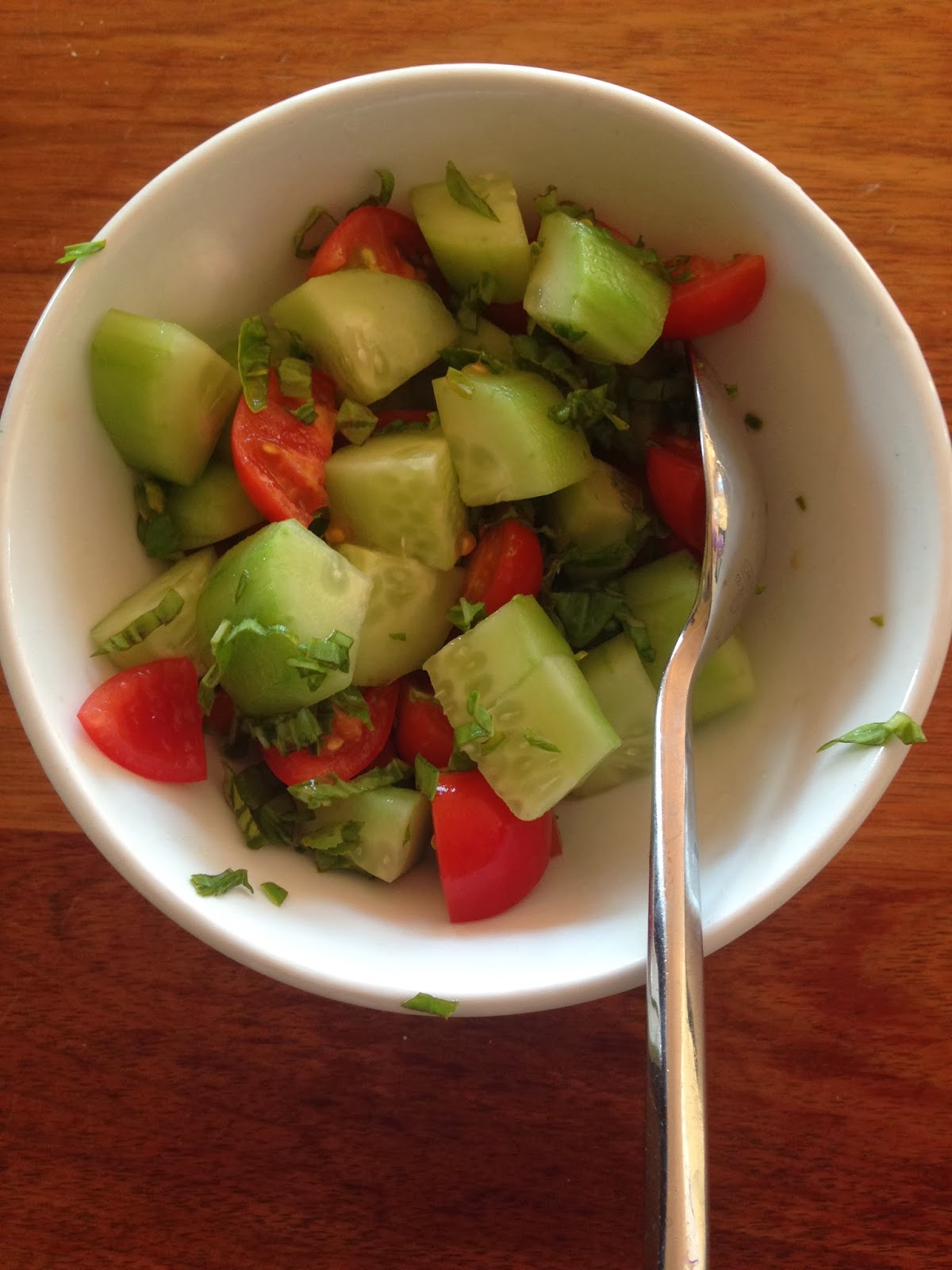
This week has been about healing for me. I am so much stronger, in so much less pain. Thursday I picked tomatoes in the garden and made a salad. Yesterday I cooked a little. Today I have the craving to bake. This is a marked improvement.
I’m getting used to my new body. I went to the doctor yesterday to change the dressings and the nurse was so funny. She looked at me and said, “Wow, just pump that thing up a little and add a nipple and those boobs are going to be beautiful!” We talked about the vast merits of having a breast surgeon who is a perfectionist (and she mused a little at the difficulties of being that breast surgeon’s wife).
Aidan, ready for high school
I’m getting used to the chemo idea. I’ve been reading about the circumstances under which I might not need chemo (because my cancer is so highly estrogen receptive) and have been back and forth with my top cancer researcher (my mom) and my favourite oncologist (a friend of a dear friend who is devoting unexpected, loving, and compassionate time to my case). The nurse yesterday also guessed that I would be able to pull off bald better than most. I laughed all the way through the dressing change. I scheduled an appointment to have my hair coloured darker. I’ve been so curious about what that would be like, but I haven’t found a good enough temporary dye in case I hate it. I think right now I have temporary hair which is another way to go.
I am tingling with delight at what it means to be alive, what it means to see the stars and watch the sky turn pink in the morning and then again at night. I am working again, loving the feel of planning programs, taking on new coaching clients, supporting people to lead fuller and happier lives. I am watching time pass with my kids—celebrating Naomi’s superb results on her end-of-year exams, admiring Aidan in his new high school uniform (high school begins for him Monday).  And I’m wondering about this new envelope of mine and what it would mean to hold my life differently and to take anything after 60 as a bonus. I watch as things go from black and white to grey to black and white again, like a herringbone pattern. Distance matters. Perspective matters. And it’s all true, the black and white and the grey. We never know the shape of our lives or our futures; we only pretend to know. I write about creating new boundaries and seeing how those change what seems possible or impossible. Maybe I should live into that too.

For those of you who want to know more about breast cancer, I now have a bunch of articles. This one was so compelling to me when I read it a year ago, though, that it’s been in my mind this whole time.
Oooh, and read this too--it's so beautiful.  http://www.nytimes.com/2014/01/25/opinion/sunday/how-long-have-i-got-left.html